
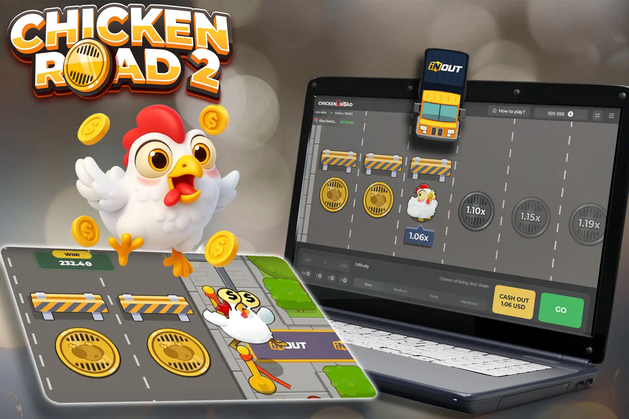





Chicken Road 2

Chicken Road 2 Gambling Game In France

Demo mode, rules and session management to play Chicken Road 2 in France in 2026, with clear limits for adults.

Chicken Road 2 demo
game image 1
Chicken Road 2

Starting In Demo Mode: What You Test

Demo mode is for understanding, not for “proving” something. You observe the pace, readability, controls, and especially your own way of reacting when things speed up or slow down. In France, keep the context in mind: entertainment reserved for adults, with deliberate choices compatible with applicable rules, without seeking unverifiable legal arguments.

Imagine the situation: you start a session “just five minutes,” then you speed up because you find it too slow. That's normal, but it's not useful. Generally, a test that truly teaches looks more like this: a few manual actions, a pause, then a restart by changing only one variable (speed, stake, duration).

Concretely, set three simple objectives. First objective: understand the possible actions (bet, start, stop, settings). Second objective: identify the moments that change the dynamic. Third objective: decide if this format suits you for short sessions, because that's where most players maintain the best control.

Chicken Road 2

Top casinos for playing Chicken Road 2 — current list

ALF Casino

ALF Casino

Mafia Casino

Mafia Casino

SG Casino

SG Casino

Retro Bet

Retro Bet

leovegas

LeoVegas

Chicken Road 2

Settings And Access: Account, Device, Pace

Before playing, clean up the environment. It's less glamorous than the game, but it prevents you from acting under stress. On mobile, connection, battery, notifications, and multitasking can distort your perception of time. On a computer, it's often autocompletion, cache, and extensions that create small bugs.

Imagine the scene: you're on public transport, unstable network, and you try to test “quickly.” You click harder, faster, and learn nothing. Generally, the best tests are done when the phone is charged, the network is stable, and you can remain present – even for a short session.

The goal is not to become paranoid. The goal is to be clear: one main device per session, settings that limit automatism, and a clean end to the session (close, exit, breathe). It's this routine that makes the game bearable in the long run.

Create A Profile Without Pitfalls

Create a clean profile: accessible email, unique password, and consistent information. This isn't a promise of "everything will be fine"; it's a way to reduce setbacks on the day you have a question, a modification, or a request to follow up on.

Imagine you enter information "approximately" because you're in a hurry. The problem doesn't appear immediately; it appears at the worst possible moment: when you want to settle an account issue or ask for help. Generally, players who avoid frustration do the opposite: they complete their profile calmly, then they play.

Also, keep a simple rule: do not share access, and close the session at the end. We're not talking about morals; we're talking about real control.

Speed And Auto-Play Settings

Speed changes everything. The faster you go, the more "reflex" decisions you make. In demo mode, it's tempting to go very fast, but you lose the ability to read the game. It's better to start slowly, manually, then test automation in small blocks, with a programmed stop.

Imagine you activate an automatic option and start replying to messages. You come back two minutes later, and you no longer know what you were testing. Generally, the good method is simple: short block, full presence, pause, then decide whether to continue or not.

If you want a useful test, change only one thing at a time: first the speed, then the stake, then the duration. It's slower, but it's much more instructive.

Security And Privacy In France

Security is mainly about habits. Device lock, session logout, no passwords on a shared device, and no sensitive actions when you're distracted. In France, maintain a responsible framework: access must remain restricted to adults, and your account must remain personal.

Imagine you leave the screen open "just for a minute" while you do something else. That's often when someone touches the phone, or you come back and click automatically. Generally, a screen lock + a logout at the end of the session is enough to avoid most problems.

And if a setting seems unclear to you, don't compensate by playing more. Stop, reread, then resume later. That's the most profitable reflex.

Chicken Road 2

Chicken Road Game 2: Mechanics And Decisions

What makes the difference isn't a "secret"; it's decision discipline. The format often presents the player with repeated choices: continue or stop, push or secure, accelerate or maintain a stable pace. The demo is perfect for learning your own tipping point, where pleasure turns into pressure.

Imagine you're chaining attempts and start talking to yourself as if it's a challenge: "come on, just one more." Generally, when that phrase appears, your session has already changed its nature. The useful test is to spot that moment and practice closing before the spiral, not after.

Here, your goal isn't to maximize. Your goal is to understand: what makes you speed up, what makes you increase the stake, and at what point you lose track of time.

Understanding Turn-By-Turn Progression

Treat each sequence as a mini-experiment. You play a small block, observe, mentally note what made you continue, then stop. This simple pattern helps you avoid the trap of the "endless test" where everything gets mixed up.

Imagine you start changing the stake in the middle because "it's not going as planned." Generally, that's not a strategic adjustment; it's an emotional reaction. The good exercise in demo mode: keep the stake stable for a full block, then calmly decide on a change for the next block.

You can also ask yourself a question at the end of each block: "If this were real money, would I continue now?" This question is brutal, but it puts the test in its proper perspective.

Recognizing When To Stop

The moments when you need to stop are not "bad" moments. They are moments when your attention drops, your mood changes, or you start wanting to "fix" a streak. The best stop is often the one you trigger early, when you are still clear-headed.

Imagine you're playing to relax, then you feel a hint of annoyance. You tell yourself you're going to "end on a good note." Generally, this phrase prolongs the session and degrades the experience. The training in free mode: close precisely at that moment, to maintain control.

Also note the physical signals: hands clicking faster, shorter breath, desire to check "just one more time." These are reliable markers because they don't lie.

5-Minute Mini-Routine

Do 2 minutes of manual testing, 2 minutes at medium speed, then 1 minute of screen-free break. Imagine you come back after the break and feel less urge to push. This is often the case. This micro-routine is enough to break the automatism and keep the test clean.

Two Costly Mistakes

First mistake: changing several parameters at once (stake + speed + duration), then no longer knowing what caused the feeling. Second mistake: testing while distracted (notifications, multitasking), then concluding that "the game is annoying." Generally, it's not the game; it's the context.

game image 2
Chicken Road 2

Budget Management And Control Tools

Even in free mode, practice as if you want to remain in control of your decisions. A healthy session rests on three pillars: duration, budget, and exit rule. If one is missing, you improvise. And improvisation is exactly what pushes a session towards excess.

Item To Adjust

Where To Find It

Recommended Value For Testing

Why It Helps

Stop Signal

Time Limit

Settings / Session Control

10-15 min per block

Avoids "overflowing" sessions

Timer finished

Session Budget

Before playing (personal note)

Fixed amount, 1 recharge max

Cuts impulsivity

Desire to recharge

Game Speed

Pacing settings

Slow start, then medium

Allows to read the gameplay

Clicks that accelerate

Automatic Mode

Game options

Small batches (e.g. short series)

Reduces autopilot

Loss of attention

Mandatory Break

Personal rule

2 min after each block

Calms emotion, clarifies decision

Annoyance / stress

Access Control

Phone / browser

Lock + logout

Protects the account

Device sharing

Transaction History

Account / History

End-of-session verification

Avoids confusion

Doubt about an action

Imagine the situation: you've had a bad day, you open the game to "unwind," then you find yourself wanting to spend more time than planned. Generally, this is where control tools become useful: breaks, limits, and session logout. These are not constraints; they are safeguards.

In 2026, the real risk on mobile is ease: one click and you're back in. So we introduce voluntary friction. An alarm, a time block, a rule "no top-ups during the session." It seems simple, and that's precisely why it works.

The Time Block Method

Play in short blocks: 10 to 15 minutes, then a mandatory stop. Not a “break if I think about it,” but a real stop. You only come back if you still want to, without tension, and with the same plan.

Imagine you tell yourself: “I’ll stop after this last try.” Then you repeat it. Generally, it’s no longer a plan, it’s a reflex. The time block fixes this: when the timer rings, you close it, period.

If you want to go further, add a rule: a decision to continue is only made after the break, never in the heat of the moment.

Stop Budget: One Top-Up Per Session

The best financial brake is the “one time” rule. Only one top-up per session, or none. If the urge to top up appears, you note it as an end signal, not an instruction.

Imagine you're playing and you feel the urge to "take a little more" to extend. Generally, that's when emotion takes over. The "one time" rule removes internal negotiation, thus protecting your budget.

To stay concrete, prepare the budget before opening the session. Not during, not after. And if you exceed the plan, you lower it next time. You don't "catch up" on the same evening.

Pause, Timeout, Self-Exclusion

Breaks are your switches. A short break when you feel the speed increasing, a long break if the pattern repeats. The idea is not to punish, the idea is to regain control.

Imagine you feel frustration rising and you're trying to "finish" at all costs. Generally, a two-minute break is enough to change the next decision. And if that's not enough, a longer break is a mature, assumed option.

Use the available tools as soon as you are calm, not when you are already annoyed. That's when they really help.

Playing on Mobile Without Distraction

On mobile, cut off sources of automatism: notifications, multitasking, and “in-between” sessions. Instead, test in a stable moment, even if it’s short. The quality of the test is worth more than its duration.

Imagine you're playing with a跳跃 connection. The screen loads, you click multiple times, you lose track. Generally, the right reflex is to stop, not to insist. The test must be clear, otherwise you mainly learn your frustration.

Also keep a simple rule: if you can't look at the screen, you don't play. It's basic, but it's what distinguishes a choice from a reflex.

Chicken Road 2

Deposits, Withdrawals & Support: Clean Process

When you move from testing to reality, the “account” part becomes as important as the game. We don’t promise deadlines or guarantees. We prepare a simple process: complete profile, primary payment method, and clear tracking of operations. In France, the framework remains the same: adult use, applicable rules, and responsible choices.

Imagine you finish a positive session and want to withdraw quickly, without checking your profile. Generally, that's where surprises arise: missing information, documents to provide, or inconsistencies. The solution is not to get angry, but to prepare beforehand.

Another useful rule: don't mix play and administration. You play, then you manage your operations in a calm moment. Mixing the two invites impulsivity.

Preparing A Withdrawal Without Duplicating Requests

Make a request, then follow up on it. One request, one follow-up. Duplicates mainly create confusion, because you no longer know which status to look at and you multiply messages.

Imagine you're chasing up "to speed things up" and sending multiple requests. Generally, you waste time because everything becomes less clear. The clean method: one request, a reasonable timeframe, then a structured support message if necessary (what, when, device, step).

Keep a simple note: date, method, amount. This precision shortens exchanges and prevents you from telling a vague story.

game image 3

In 2026, How To Keep The Game Healthy

Gaming remains entertainment. If you want it to stay that way, you must be able to say stop without negotiating. It's not a slogan, it's a mechanism: limits + breaks + routine. The most important thing is not your "technique", it's your ability not to play when you're in compensation mode.

Imagine you open the game because you feel stressed, then you try to "make up for it". Generally, that's when the session slips. The right decision is not to look for a "better time", it's to close and come back another day, with a short plan.

In France, maintain a responsible framework: personal account, access reserved for adults, compliance with applicable rules, and no invented legal discourse. What matters are your concrete actions: time, budget, break, and exit.

Warning Signs And Good Reflexes

Warning signs are rarely subtle: you speed up, you increase the stake without a plan, you think "just one more", or you lose track of time. As soon as one appears, apply a reflex: pause, then make a decision off-screen.

Imagine you find yourself clicking faster and ignoring menus. Generally, that's the start of autopilot. The right reflex: close the app, put down the phone, drink a glass of water, and then decide if you're coming back.

If this scenario repeats often, use a longer break. It's not dramatic, it's smart.

When To Contact Support

Contact support when you have a concrete point, not when you're angry. An effective message is a few lines long: what happened, when, on which device, and what solution you expect.

Imagine you write "it's not working" without details. Generally, you'll be asked ten questions and the thread gets longer. Conversely, a structured message shortens everything: "access", "operation", "verification", "display". You save time, you keep a cool head.

And most importantly, don't change three parameters at the same time while troubleshooting. One variable at a time, otherwise you'll never know what actually solved the problem.

FAQ

How to use trial mode to learn without drifting?

Start with a timer and a clear objective: understand the controls and your own reaction, not "last longer". Imagine you speed up as soon as you get bored, then conclude that the game is "stressful"; often, it's the lack of framework that causes stress. Test in short blocks, manually at first, then change only one setting at a time. As soon as you feel the urge to insist or prove something, close and resume later, under better conditions.

What should I check before depositing real money?

First, check the account journey: complete information, access to your email, and a defined primary payment method. Imagine you win one day and want to withdraw quickly, but your profile is incomplete; frustration often comes from there. Prepare everything calmly, set a budget rule, and do not perform any operations when you are rushed or distracted. If a point is unclear, postpone the decision rather than compensating with speed.

How to avoid playing too fast on the phone?

Cut out distractions: unnecessary notifications, multitasking, and "in-between" sessions. Imagine you activate automatic actions while replying to messages; you lose track of time and learn little. Prefer a short session at a stable moment, start manually, and keep a scheduled stop. If the network is unstable or the battery is low, the best decision is not to insist.

What to do if an operation seems stuck or slow?

Do not repeat the action in a panic. Imagine a loading screen and the urge to confirm again; that's where duplicates and confusion arise. Wait, check the history, verify your connection, then only try again once if necessary. If you contact support, provide simple details: approximate time, device, method used, and exact step where it stops.

How to prepare a withdrawal request calmly?

Do the work beforehand: consistent profile, clear documents if requested, and a stable primary payment method. Imagine you send multiple requests "to speed things up"; often, you waste time because you no longer know what to follow. Make a single request, note the date and amount, then calmly follow the status. If assistance is needed, a short, structured message gets a more useful response than a long, emotional text.

What are the signs that you need a longer break?

When gaming stops being entertainment and becomes an attempt to compensate: you speed up, you increase without a plan, you repeat "just one more", or you play when you're no longer present. Imagine you no longer feel pleasure but you continue "to finish"; that's a clear signal. Take an immediate break, then a longer one if the pattern repeats. The goal is to make adult decisions, taken calmly, within a responsible framework.

How to read other people's reviews without getting caught up in the tone?

Look for details, not emotions. Imagine a very negative comment without context; it could come from an incomplete profile, impatience, or repeated actions. Useful feedback explains a precise step, an action, then a consequence. Create your own grid: clarity of rules, time control, account management, support, and routine. You transform reviews into practical advice instead of enduring them as absolute truth.

Play Now
🇬🇧 English